Pages

Aug 31, 2010

New York Treasure Hunting Deluxe - The Oriskany Patent

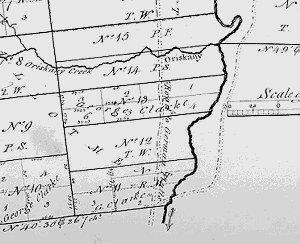
A map of the vast Oriskany Patent, drawn in 1789, provides a very detailed look at the extreme Upper Mohawk Valley at the close of the Revolutionary War. This is also an excellent resource for the sharp eyed detectorist ...

At the west end of the patent (top of the map) one can see the portage between the Mohawk River and Wood Creek, with the fort guarding this portage (then called "Fort Schuyler" and later "Fort Stanwix") being passed closely by the river road.
At the eastern end of the patent (bottom of the map), the relationship of the patent boundary to Oriskany Creek can be seen (see detail above). At this spot the river road branches with one segment crossing the river to the north. A modern highway follows this same alignment today. These maps are never going to have the proverbial "X marks the spot" but for those of you that already know the area or have done some research, they can be a wealth of information.
 Both myself and Treasure Dave are big believers in canoes for treasure hunting. Most of the old water routes are the best and ONLY way to access a ton of virgin spots, a canoe can help you cover a good bit of stream and this is also the reason I recommend owning "amphibious" metal detectors. I know that the Fisher CZ-21 or the MineLab Excalibur's are expensive but you really need a waterproof machine if you want to do any serious hunting and they are worth the extra cash, it's not uncommon for Dave and I to be in three feet of water one minute and high up on a creek bank the next. We could never use a land machine to do this kind of hunting.
Here is another map of the patent of Oriskany for closer examination .... Just Click Here!
Good Hunting!

Treasure's Of The Palatine Mission


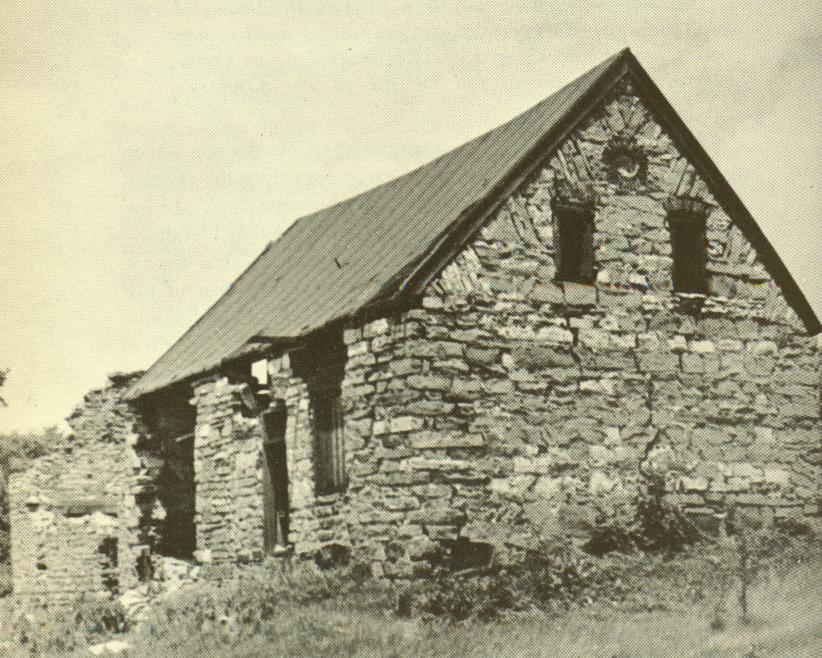
Built in 1729 by Jacobus Ehle, a Palatine German, who was educated at Heidelberg and ordained in England in 1722. In this year he migrated to America. He preached in the Hudson Valley and then made his way to the Mohawk Valley. After a long and fruitful life in the work of the church, he died in 1777, at the age of 92. 
The house is no longer standing.

In 1752 Dominie Ehl's son built the house addition to the mission and his Initials, P. E. 1752, are in the round recesses in the south gable end. This story and a half building was of similar construction to the mission in its walls and roof, but had two floors and a cellar. Under the eaves and at the sides of the doors and windows on each side were the loopholes for gun fire. The brick for the chimneys and the finishing lumber was brought from Schenectady.


Not forgetting his civil obligations and in conformance with the law Dominie Ehle took the citizenship oath at Albany October 14, 1732. In 1732 he bought the land of Lot 1, Harrison Patent at the mission from Philip Schuyler that ever since has been the Ehle homestead. The easterly 100 acres was sold to George Eacker.


Following their home building the clearing was gradually carved out of the forest and along the river flats for farming. This opened up the view across the valley. The house stands on a slight elevation above the river flats so that the Indian canoes on the river and later the barges of the settlers could be seen as they passed.


On the river trail in front of the mission, the Indians traveled back and forth to trade or for conferences with the officials at Albany or Sir William Johnson, the Indian agent. Westward the settlers passed in search of homes or eastward to trade at Schenectady or Albany. By the ford across the river and through the clearing settlers and Indians passed to Stone Arabia and beyond, or across the river and down stream to Schoharie or by the Otsquago trail to the Susquehanna country. Over on the hill in front were the bark huts of the Mohawk village with camp fires smoking by day and twinkling like fireflies at night. Out of the surrounding forest strode the hunter, red and white with his kill, stopping to look at the home and children. Sometimes, that great man of the valley, Sir William Johnson passed on his way to conferences with the western Indians or marched his farmer militia and Indians to the French and Indian wars. Those were great days for the Dominie and his family when his genial patron stopped for greeting or refreshments.


The kindly Dominie won the good will of the Indians by his ministrations and on their arrival the Mission and the basement were their quarters, with their campfires in the clearing out in front. The saying that the Indian never forgets a kindness did not fail. No war danger ever reached that family or house while they were on guard. The family passed in time but the house staid on until vandals of the present days began to wreck it in times of peace, searching for relics or treasures.


That the local Indians, the Mohawks guarded well their missionary, his family and home was shown both in the French-Indian wars and the Revolution. When the Mohawks were strong enough no foe-man could reach the Mission and when the French-Indian raids were on that they could not resist, their warning came in the night to flee. In the Revolution the Mohawks were largely outnumbered by the Senecas, Cayugas, Onondagas and other fierce western tribes over whom they had but limited control. Again they warned Dominie Ehl's family when it was too dangerous at their home for their protection: The family would then cross to the island at the ford at night and with their canoes paddle downstream to their kinsfolk at Albany and safety. The house was always unharmed when they returned, once after an interval of two years.


In the urgent haste of one of those flights, the family silver and heirlooms were taken out in the darkness by the cellar way and buried In the forest a short distance away. No lights could be used and in the haste and anxiety the hiding place was not well located. This could not be found when the family returned and has not to this day, in spite of many searches by the family and treasure hunters, the latter often using divining rods, incantations and what not.


Possibly some watcher may have seen the treasure buried and secured it .....  or maybe not ???
This is just another of the many tales of treasure in the Upstate New York area that myself and Treasure Dave have researched over the years ..
PS
We are fairly certain the treasure is still there ..
New York Treasures and Metal Detecting Sites

Aug 30, 2010

True Treasure Tales From Colonial Upstate NY

The Story of the Money Hole

An Address Delivered Before a Joint Meeting of the Mohawk Valley Historical Association and the Van Epps-Hartley Chapter, New York State Archeological Assn., 1936. (By Robert M. Hartley.)

Many brave men never came back from the field of Oriskany on that memorable August day in 1777. Some of the most prominent residents of Old Warrensburg died there and their bodies were never recovered or buried. Among them was Samuel Pettingill, a well to do farmer and country doctor, he was a man of education and influence and a captain in Col. Frederick Fisher's Third Tryon County Militia.

Family tradition is that on the morning of the day he marched with his company to join General Herkimer for the relief of Fort Stanwix, that having a considerable savings of silver money, which evidently he feared to leave during his supposed temporary absence he put this money in an old copper teapot of tea kettle, picked up a shovel and walked eastward from his house to the woods near the Chuctamunda creek where he buried his savings. His family had noted with interest all his preparations, but none accompanied him, merely noting the direction he had taken towards the creek, consequently were in ignorance of the exact spot he had chosen as a safe hiding place from theft and possible raiders. It is said he was gone a short half hour. That afternoon he marched away, and never returned. Many searches were made by the family for this buried money, but without results. Though the years that followed its burial, many friends and neighbors assisted in the search, but its hiding place was never discovered.

About thirty-five years ago two of Capt. Samuel Pettingill's great great grandsons, Dewitt and Milton Devendorf, enthusiastically renewed the search in which I and others assisted. During the early springtime we prodded over several acres with sharp pointed steel rods and many excavations were made where the rods indicated obstructions that did not feel like stones. However, the labor expended was no more successful than all previous searches. Captain Pettingill's hiding place of where he buried his money on that August morning, so long ago, perhaps will never be known.

The tradition of this buried treasure still lingers, for the ravine near where the money was supposed to be buried has been commonly known for a hundred years or more as "The Money Hole."

As the next two stories have to do with the Ross and Butler raid on Warrensbush in October, 1781, it may not be amiss to here explain why this last raid was made.
(These are also excellent sites to metal detect, pay attention to landmark clues!)

Warrensbush was the most eastern section of Tryon County and because of its close proximity to Schenectady and Albany and their protection, few raiders had previously been able to penetrate and successfully destroy this settlement and Duanesburgh, while the people of all other sections along the frontier to the south and west were badly torn and quite destitute. Consequently, Warrensbush, until october, 1781, was as yet almost untouched and able to supply its less fortunate neighbors with much of their wheat and other necessary supplies. Knowing this, Governor Haldiman in the spring of 1781, sent spies into the Mohawk country to learn the condition of the people of Warrensbush and of their security against attack. These spies reported back that the people were alert to invasion. However, Haldiman was determined to destroy this settlement of possibly by a swift and secret attack. This raid was carefully planned by the Governor and his most experienced Ranger and Indian officers. Every detail was studied for its successful accomplishment, as all previous raids had lost their force before reaching this thickly settled section, which was producing for their more unfortunate neighbors in the Schoharie and upper Mohawk Valley the supplies they so badly needed. So during the summer preparations were made to send a picked forced of about a thousand men and Indians, under the command of Major John Ross and Lieut. Walter Butler, to destroy Warrensbush and Duanesburgh. A complete account of these preparations for this raid is contained in Chapter 10, of Cruickshank's History of the Royal Regiment of New York," ("Johnson's Greens") and also of Major Ross' official report to Gov. Haldiman, of the results of this expedition in which he states: "In seven miles of Warrensbush every house was in flame, 100 farms, three miles and a large granary for public use were reduced to ashes, the cattle and livestock were likewise destroyed--the inhabitants fled in the night, etc., etc."

The raiders advanced rapidly from Oswego over unfrequented trails, but when near Corry's Mush (Root) were discovered and an alarm was sent to the eastern settlements of Tryon and Schenectady counties. But by marching all night the invaders crossed the Schoharie creek near Fort Hunter, where they lay in the woods on the present Billing's farm on Yankee Hill, until daylight, when various detachments were sent out to destroy the settlements before help could reach them from Schenectady and other points. Among the descendants of Florida's pioneer families there still lingers stories and traditions of many thrilling escapes that have never been published. Simms, Beers and Frothingham histories have recorded many family traditions of the raids in the central and upper Mohawk and Schoharie Valley sections, but comparatively little of the escapes and experiences of the settlers of Warrensbush in one of the worst and most destructive raids that ever befell any section of our frontier at any one time has even been published. Perhaps this may be accounted for as it was the last great invasion in the Mohawk country just at the close of the Revolution and that while the results of the raid was quite complete, the effect was not so far reaching and sooner recovered, than had it come earlier in the war, but the war was ended and the inhabitants left to themselves without further fear, immediately began to recover and rebuild. This raid on Warrensbush ended with the battle of Johnstown late that afternoon and the death of Walter Butler on the retreat, at the crossing of the West Canada Creek the following morning.

The Escape of Mrs. Pettingill and Her Family in the Ross and Butler Raid of 1781.

This story had to do with another loss and near tragedy that befell the widow and family of Captain Samuel Pettingill. You will remember that Capt. Pettingill was killed at Oriskany. The death of husband and father must have been an almost paralyzing loss to his wife as she was left with a family of thirteen children, but courageous woman as she was, they had managed to live and we find them in the fall of 1781 living on their farm on the highlands in the southwestern part of the town with sufficient feed for their few cattle and supplies for the family for the coming winter.

One of the detachments sent out from the raider's temporary encampment on Yankee Hill, as previously mentioned, was discovered approaching the dwelling of Mrs. Pettingill, who with her family was able to escape to the nearby woods. They continued their breathless and headlong flight until they reached a secluded over-hanging branch along the Chuctanunda creek. here they hid in a cove like recess in the creek gorge. But several Indians had trailed them and with hushed breath the hidden family could hear them coming over the tinkling slate rock along the shore of the creek, searching for their place of concealment. Soon several Indians passed by -- almost within touching distance, but they did not discover the terrified family as they lay huddled in the crevice covered by vines and branching hemlocks. As the sound of the Indians' footsteps became less distinct over the crackling slate, the youngest child, a little girl, began to sob and cry, fearing the child's crying would reach the ears of the retreating Indians the dauntless, quick witted mother grabbed her apron and smothered the cries of the child. Instant action was necessary, for it meant death for all the family if their place of concealment was discovered. Several minutes passed before the mother dared remove her hand from the mouth of the now unconscious girl. She was apparently dead, but by vigorous shaking soon began to breathe again. Towards nightfall the family cautiously made their way back to their home only to find their buildings burned with all their possessions. Family tradition is that fortunately a stack of wheat had been missed by the raiders and it is declared that the family lived on this stack of wheat during the early fall until they could build themselves within the cellar of their burned dwelling a make shift shelter from partially burned timbers and poles which they thatched and roofed with brush and straw and here they lived through the hard winter of 1781-82. It is also family tradition that the undestroyed wheat in the partially burned stack contributed very largely to the family's source of support during the winter.

Surely these ancestors of ours never failed to meet an emergency in those dark days of bloody strife.

The Escape of the Rowland Family.
(more potential treasure)
This is also a story of the Ross and Butler raid of 1781. The Rowland family, upon the coming of the raiders in the early morning, carried some of their most useful household effects to the nearby woods when they all took up a hiding place, prepared in advance for such an emergency upon a platform of poles built some fifteen feet above the ground in the middle of a dense thicket of sizeable low limbed hemlock trees, which ordinarily would not be seen either from the ground or from any other direction. Here the family quietly lay and in the distance could see the smoke of their burning home and that of their neighbor--Timothy Hunte, rolling over the tree tops.

For several hours the family feared to come down, when hearing a slight noise below they saw to their terror several Indians coming through the woods in their direction. Suspense and fear held them stupefied as the Indians passed directly under their hiding place, the last one suddenly stopped, but he did not look up or around, he had only stopped to adjust some of the load of spoil he was carrying, when he hurried on after his companions and needless to say greatly to the relief of the terrified family in the tree tops above.

(This story was told by the late Jay C. Rowland in 1905, whose grandmother was the mother of the family in the tree tops.)

This Is as good as it gets .. Treasure Dave and I had to dig for this one, but the exact location still needs to be pinpointed by YOU and hunted hard. I would dig all HITS in these areas, Including the 'overload signals' , that old tea kettle should ring off like a garbage can lid!  Let us know how you do.
Good Luck

Odyssey and The HMS Sussex Treasure

The Bounty Hunter
The richest shipwreck in history has been sitting beneath a half mile of ocean for 300 years. Greg Stemm is sending a robot down to get it.

In 1694, an 80-gun British warship called the HMS Sussex set sail for southern France loaded with as much as 3 million pounds sterling and 6 tons of gold. The bounty was intended for the Duke of Savoy, a bribe to keep him allied with England in its war against Louis XIV.
The Duke never did get the money. Severe gales whipped up off the north coast of Africa. The Sussex foundered along with a dozen other ships in the British fleet, taking all its riches (and the lives of 1,200 crew members) to the bottom of the Mediterranean Sea. Ultimately, the Duke threw his support to Louis XIV, and England's battle with France raged for seven more years before ending in a stalemate.
The plight of the Sussex left behind two huge questions, the first for historians: What if the mission had been successful? It's conceivable that England would have beaten back Louis XIV and annexed parts or all of France. If so, the British government might have been less concerned with a group of 13 rebellious colonies across the Atlantic and allowed them to split off to form a commonwealth - like Canada.
The other question, for the rest of us: What happened to all that loot?
By most accounts, the riches, estimated to be worth as much as $4 billion at auction, are sitting right where they have been for three centuries, some 2,500 feet beneath the ocean's surface. For treasure hunters, the Sussex has long been considered the ultimate prize, protected by a super-extreme environment: 1,100 pounds per square inch of pressure and complete darkness. No human, of course, could ever dive that deep.
Recovering the bounty is a job suitable only for a robot.
Greg Stemm is a 21st-century treasure hunter with just such a bot in mind. He's been researching the Sussex for two decades, and late this summer, he's planning to send a remote-operated vehicle, or ROV, about the size of a Chevy Suburban down to get it. "Our research makes a case that this could be the richest shipwreck in history," says the 46-year-old founder of Odyssey Marine Exploration. Stemm has a database of 3,000 deepwater wrecks, three side-scan sonar mapping devices, and a fleet of ROVs designed to scout out and recover everything from porcelain to gold bullion.

A slim man with a salt-and-pepper beard and an ever present national geographic cap, Stemm is more geeky businessman than swashbuckling explorer. He's versed in shipwreck history but would rather talk about how to minimize risks and amortize costs. He's convinced that technology - everything from cheap data storage and fiber optics to sonar scanning devices, and, of course, robots - is ushering in a new era of treasure hunting. He plans to use such tools for the good of society - and to earn a handsome profit for himself.
The key word is profit. Odyssey, based in Tampa, Florida, works only in deep water and puts potential expeditions in two simple categories: worth the effort and not. To make the cut, a wreck must meet three basic criteria. First, are the goods valuable enough to justify the expense of recovery? Just searching for a wreck costs $100 or more per square mile. Second, can it be found? Odyssey sometimes stakes out 2,000 square miles on a hunt. Coming up empty-handed after such an effort is not an option. And finally, will the company be able to keep the goods it recovers? "That's the part most people miss out on," Stemm says.
In scouting for targets, Stemm relies on recovered journals and ship logs as well as tips from fishermen. Odyssey currently has 15 projects on the books that meet all three criteria - each estimated to be worth at least $50 million. The HMS Sussex could return as much as all the others combined. Anyone with a passing knowledge of shipwrecks and a daydream of running their hands through a chest of gold and jewels knows roughly where the Sussex went down. Stemm claims to know precisely. And thanks to a series of negotiations with the British government, he's secured exclusive rights to the wreck.
For all the tech involved, treasure hunting is a straightforward process. Stemm and his colleagues identify an area where a ship went down and then begin the search by mapping the ocean floor. When they think they've identified a target, they deploy an inspector ROV to take some video and grab an artifact or two. If archaeologist reports warrant it, the team follows up with a larger, more complex ROV for excavation.
The biggest advance in modern-day treasure hunting is in mapping. A towfish dragged off the back of the boat bathes the seafloor in sonar waves, translating the data into a topographical map. It doesn't come cheap. A towfish can cost $250,000 with monitoring equipment - Odyssey has three, made by EdgeTech - but it's worth it. Using one is like casting aside your old spin-reel fishing pole in favor of a dragnet.
Odyssey's towfish cover 1,000 meters of ocean floor at a time. High-end models used by the oil industry can scan a mile or more. And the results are incredibly precise. Last fall, the New York Office of Historic Preservation requisitioned a bathymetric survey of 140 miles of Hudson riverbed. The results were so revealing that the city refused to release them for fear of mass looting. Every one of the hundreds of barges, tugboats, passenger ships, and pleasure craft that had sunk over the centuries had been identified.
Of course, treasure hunters aren't interested in tugboats. Knowing which vessels carried a real bounty to the ocean floor requires getting a close look. A decade ago, it wasn't practical to take quality video at depth because of the limitations of transmitting it back to the ship over copper wire. Early ROVs would snap pictures and return to the boat to develop the images - a huge waste of time. Today's robots record hi-def digital video to cheap onboard hard drives and transmit live footage back to the ship over fiber-optic lines. (Fiber has further helped ocean explorers in unexpected ways. Back when AT&T were laying fiber willy-nilly, they bought $50 million dynamic positioning ships like they were canoes. Now, Stemm talks about acquiring such boats secondhand at a fraction of the cost.

Then there are advances in the ROVs themselves. Treasure hunting is benefiting from a rash of robot R&D funded by the government and the oil industry. Last year, Woods Hole Oceanographic Institution introduced Jason II, a $2.5 million bot developed for the National Science Foundation that can dive to 22,000 feet - giving it access to 98 percent of ocean floors. Houston-based Oceaneering is building ROVs that do maintenance on underwater oil drills as well as take on high-profile tasks like recovering the remains of TWA Flight 800 and pulling up a military helicopter from 17,000 feet. Meanwhile, as the tech gets better, it also gets cheaper, trickling down to treasure hunters. An entry-level, shallow-water ROV now costs about $20,000.

Stemm's crew launches a side-scan towfish for a bathymetric survey of the ocean floor.
When it comes to hauling up the bounty, sophisticated deepwater excavator bots are still expensive to purchase outright. Such ROVs are designed to install cables and repair leaks at depth. They come with 100-plus horsepower and complicated mechanisms like a triaxial magnetometer, designed to sniff out buried cables at great depths, and high-pressure nozzles to cut through clay. They can run $3 million or more.
With some tinkering, they can retrieve fragile artifacts. For the Sussex effort, Odyssey will lease an ROV designed for cable maintenance work and customize it with acoustic positioning, a "sticky grid" video system that provides a virtual archaeological layout, a multi-tiered elevator, and, of course, a grabber attachment. "It's spring-loaded," says Stemm, "like one of those games you see in a barroom."
We're aboard the Odyssey, a 113-foot research vessel equipped with a stern-mounted A-frame crane, two ROVs, a couple of side-scan sonar towfish, enough computer and video equipment to do light recovery work in a few thousand feet of water, and a massive roll of steel-armored fiber-optic cable. The crew of 10 has been traveling all night in search of a spot some 60 nautical miles off the coast of northern Florida, intent on finding the Bavaria, a steamship that went down in 1865.
Loaded with an estimated $50 million in gold and artifacts, the Bavaria was carrying carpetbaggers from New York City to New Orleans after the Civil War when it encountered a hurricane. "We have records of the last place it was spotted, and we have to ask, were they just getting to the edge of the hurricane, or were they right in the middle?" says crew manager Ernie Tapanes. "We have a search area of 600 square miles."

The Odyssey had spent the summer of 2002 mapping the area, at a cost of roughly $5,000 a day, and identified 50 targets that could be the Bavaria. Now, with data in hand and the promise of good weather and calm seas, the crew is hoping to drop an inspector ROV and survey four sites over the next three days. But at the first location, waves are pounding the sides of the boat. The horizon appears, disappears, and reappears in between 6-foot swells. The rocking makes it tough to stand, much less walk, and far too dangerous to lower a quarter-ton robot over the side.
Captain Sterling Vorus decides to hover awhile, hoping the weather will turn. It doesn't. The all-night trip was for naught. Disappointed, the Odyssey turns around and begins the slow trudge to shore. On the way back, Stemm offers to show me how the mapping was done. I grab the railings and, hand over hand, follow him to the ROV shack, a 12- by 12-foot room at the stern jammed with monitors, radios, weather-monitoring devices, and PCs. Treasure-hunting mission control.
As it turns out, mapping the seafloor is a lot like mowing a lawn. The ship drags the towfish - a roughly 7-foot-long, bright-yellow steel missile - on a few miles of cable. Depending on currents, the sonar-scanning begins, say, north to south, revealing anomalies on the seabed. "We can find anything bigger than the size of a chair," says Stemm. If the crew needs a closer look at something, the ship changes course and runs east to west, creating a crosshatch. For the ship's captain, the trick is to maintain a strict course - up and back, overlapping slightly on each pass - and not to let the device hit bottom. The towfish is neutrally buoyant - it neither sinks nor floats - but an unexpected ridge, or the jutting mast of a downed sailboat, can come up fast.

For the tech who's examining the data feed on a monitor, the challenge is simply staying awake. Mapping occurs 24/7 until it's done. Most of the time, the seafloor scrolls by as a stream of nothingness. It's like searching for a single cloud in a gray sky. "People have been known to nod off between 3 and 5 in the morning," says Tapanes. "There are areas where you'll go 12 hours and not see a thing."
When the sonar waves encounter something other than sand ridges, it shows up on the screen like a birthmark. A small wood boat appears as a jagged dot the size of a thumbnail. Anything with sharp edges or metal components, which deflect sonar waves with greater force, shows more clearly. An image of a battleship looks like a photo negative. Over the years, the crew has found everything from Spanish galleons to what seems to be an F-16 fighter jet off North Carolina. They told the Navy about the F-16. The Navy shrugged. Apparently, it happens.

Stemm is eager to bring up the Sussex for its historical value, but he's never lost sight of a central question: Can he keep the booty? Stories are legion in the treasure-hunting world of adventurers who spent months excavating riches only to have governments or insurance companies step in and make a claim. In a 1998 book, Ship of Gold in the Deep Blue Sea, author Gary Kinder recounts the recovery of the SS Central America, a steamship loaded with 21 tons of gold from the California Gold Rush that went down in 8,000 feet of water off Cape Hatteras, North Carolina. In 1996, treasure hunter Tommy Thompson went after the Central America and brought up millions of dollars in coins by developing new methods to work at depths once considered unreachable. He then spent a dozen years and millions in legal fees battling for the right to keep it.

But Thompson was an engineer who considered marine excavation purely a matter of technology. Stemm is all business. A founding member of the Young Entrepreneurs' Organization, where he rubbed shoulders with Michael Dell and future AOL vice chair Ted Leonsis, Stemm has a head for making money - and spinning things his way. He dropped out of college at age 20 to travel the world as Bob Hope's PR man. When that was over, he started a "very profitable" advertising and public relations business in Florida.
In 1986, Stemm was looking for a dinner boat to take to Jamaica when he stumbled across a research vessel for sale by the University of North Carolina. He bought it and, he says, "through a series of coincidences, I ended up with a small ROV." With a boat and a robot, Stemm was on his way to becoming a treasure hunter.
As important as ocean carriage continues to be - seafaring ships toted almost 6 billion tons of cargo last year - there was a time when water was the only worldwide highway. Without the benefit of global positioning or satellite weather mapping systems, countless ships have gone down over the centuries. Stemm likes to cite an unproven stat that 10 percent of all ships that have ever sailed have sunk. He and partner John Morris founded Odyssey in 1987 to go after a share of the loot. "Everyone knows there are billions of dollars on the ocean floor, and the technology exists to find it and recover it. But can you do it cost-effectively?"

The towfish sends back hi-res solar images like this modern-era vessel.
Odyssey's first success came shortly thereafter, with a 1622 Spanish wreck off Key West. Stemm broke even on the $5 million effort to recover artifacts, pearls, and gold, but it was worth it. Odyssey's credibility was established. Soon, it would open the door to the Sussex.
In 1997, Stemm went to London to negotiate an arrangement with the British government's shipwreck department - only to discover that there wasn't one. No one had ever tried to pre-negotiate rights to sunken treasure. He began working on the Ministry of Defense, making a case that the government retained sovereignty over a 17th-century vessel. "We didn't want to get tied up in courtrooms after the fact," Stemm says. Ultimately, London said it could be interested in an agreement, but Stemm had to find the ship first.
So the crew began mapping the Spanish coast, a process that took a dozen of Stemm's men four years and cost $3 million. They determined that the Sussex went down in a high-traffic shipping lane near the Strait of Gibraltar. Odyssey's sonar maps revealed 418 targets, two of which turned out to be Phoenician wrecks that dated as far back as the fourth century BC. "You see a lot of geology, but then all of a sudden you could see cannons," says Jamie Sherwood, a technician on board for the Sussex mapping expedition. "We knew it was something substantial."
The mapping complete, the crew eliminated obvious rock formations and dropped an ROV into the water for further inspection. About the size of a refrigerator, the inspector ROV is equipped with video cameras, a manipulator arm, and a basket to carry delicate items to the surface. Once submerged, the robot transmits video of its surroundings back to the ROV shack. Watching the video feed is a familiar experience - like the Discovery Channel - except that you're the director. Two joysticks control thrust (forward and backward, up and down) and rotation. Just don't kick up any sand or run into anything. "Almost anywhere we drop an ROV, we're the first to see what's there," says Stemm. "I still get a thrill out of that."
A lot can be learned from a visual inspection with an ROV. If the site appears to be a valuable wreck, the ROV tech brings up a few artifacts - a gold watch, some porcelain, a few coins, an anchor - to be inspected and dated by an archaeologist. In late summer 2001, Stemm and his partners brought back to London a sonar depiction of the Sussex, archaeological reports dating a number of recovered cannons, and underwater photos. It was good enough for the British government. A year later, Odyssey had a deal.

According to the terms, the company funds the excavation - at a cost of $5 million or more. In return, it gets 80 percent of the first $45 million, half of the next $455 million, and 40 percent of everything beyond that. The government has first rights to buy everything. The rest will be sold at auction, on Web sites, maybe on QVC - wherever there's an audience. If the bounty goes for $4 billion (Stemm, who was once the subject of an SEC inquiry for overstating the values of pending projects, opts for a conservative $500 million), Odyssey stands to make $2 billion. Critics of the Sussex arrangement say that would make Stemm, his company, and its investors the richest pirates in history.
Chief among those critics is the Council for British Archaeology, a charitable group devoted to historical preservation. It accuses the British government of "selling antiquities to pay for an investigation of doubtful archaeological feasibility, while also lining its own pockets and those of a foreign company." The CBA claims that the arrangement sets a bad precedent and will pressure other governments to "sign similar or worse deals, putting their underwater heritage at peril."

There's no denying that Odyssey's deal demonstrates how technology is opening new profit-making opportunities in ocean exploration. But Stemm has a notion of doing good, not just doing well. There are thousands of shipwrecks on the ocean floor that weren't carrying $50 million in treasure but nevertheless have incredible historical value. If Stemm can establish Odyssey as capable of good archaeological work, he could get hired by nonprofits (universities, museums, governments) to bring up such wrecks. Stemm also talks about getting into adventure tourism - allowing the public to experience the wonders of the deep firsthand. Whether such notions mean Stemm has a conscience or is just a good salesman is tough to tell. Having spent his whole career in PR and treasure hunting, two industries notorious for breeding smooth operators, Stemm remains a likable, enthusiastic geek - but not without a certain sheen about him.

The Sussex excavation is expected to take three months or more. To raise the necessary funds - it's not like Odyssey has regular earnings - Stemm is out stumping. He negotiated a deal with National Geographic to produce a two-hour TV special that he says is worth a few million. He's also been offering up logo space on his ROV. He won't talk about interested sponsors, but a robot-building consumer electronics giant like Sony might want to slap its brand on a cool piece of technology (especially if it shows up in a two-hour prime-time special). Maybe some Motorola headsets for the ROV techs? Get some Wi-Fi going and Intel will be all over it.
Of course, any corporate dough is pennies compared with what Odyssey stands to pull up from the Sussex itself. All that's between Stemm and real wealth is a whole lot of ocean and a few questions. Has the bulk of the treasure been ripped away by currents? Devoured by gold-eating grouper? Unlikely. Did other ships in the Sussex fleet save the loot before it sank? Might it have already been recovered by the same before-their-time geniuses who built Stonehenge and the Great Pyramids? Doubtful. Was the Sussex carrying not money but one big IOU? Maybe.
It's also getting late in the game for Stemm. He was planning a May recovery, then June. Now late summer. But by July, he still hadn't secured an excavation ROV or a recovery ship. Soon the weather will turn. Another year in waiting means more time for critics to persuade the British government to reneg.
If the Sussex effort falters, Stemm becomes the latest in a line of people to search for unclaimed wealth only to come up empty - another Geraldo eating his hat before the bare tomb of Al Capone. And yet even failure wouldn't be a total loss. Here's a guy who gave up a comfortable life serving the man for his dream to explore the depths of our oceans and of our history. How cool is that?

Aug 28, 2010

Get Ready To Hit The Beach


Hurricane season is in full swing here in Florida and I hate to say it but I'm crossing my fingers for some weather .. Hurricanes mean one thing to me and thats fresh treasure on the beach!!! Get ready boys ...  
Fisher 1280-X Aquanaut Metal Detector with 10" Search Coil
Minelab Excalibur II (Two) 1000 Underwater Metal Detector
WORKING THE SURF:With Fisher Metal Detectors
Fisher CZ-21 Metal Detector with 10" Coil

U.S. Economy And It's Unavoidable Side Effects

Ten Practical Steps That You Can Take Now To Insulate Yourself From The Coming Economic Collapse

Most Americans are still operating under the delusion that this "recession" will end and that the "good times" will return soon, but a growing minority of Americans are starting to realize that things are fundamentally changing and that they better start preparing for what is ahead. These "preppers" come from all over the political spectrum and from every age group. More than at any other time in modern history, the American people lack faith in the U.S. economic system. Well, not everyone can move to Alaska and start working that gold claim or run off to the Florida and start metal detecting full time but hopefully this article will give people some practical steps that they can take to insulate themselves (at least to an extent) from the coming economic collapse.

Before I get into what people need to do, let's take a minute to understand just how bad things are getting out there. The economic numbers in the headlines go up and down and it can all be very confusing to most Americans.

However, there are two long-term trends that are very clear and that anyone can understand....

#1) The United States is getting poorer and is bleeding jobs every single month.

#2) The United States is getting into more debt every single month.

When you mention the trade deficit, most Americans roll their eyes and stop listening. But that is a huge mistake, because the trade deficit is absolutely central to our problems.

Every single month, Americans buy far, far more from the rest of the world than they buy from us. Every single month tens of billions of dollars more goes out of the country than comes into it.

That means that every single month the United States is getting poorer.

The excess goods and services that we buy from the rest of the world get "consumed" and the rest of the world ends up with more money than when they started.

Each year, hundreds of billions of dollars leave the United States and don't return. The transfer of wealth that this represents is astounding.

But not only are we bleeding wealth, we are also bleeding jobs every single month.

The millions of jobs that the U.S. economy is losing to China, India and dozens of third world nations are not going to come back. Middle class Americans have been placed in direct competition for jobs with workers on the other side of the world who are more than happy to work for little more than slave labor wages. Until this changes the U.S. economy is going to continue to hemorrhage jobs.

The U.S. government has helped to mask much of this economic bleeding by unprecedented amounts of government spending and debt, but now the U.S. national debt exceeds 13 trillion dollars and is getting worse every single month. Not only that, but state and local governments all over America are getting into ridiculous amounts of debt.

So, what we have got is a country that gets poorer every single month and loses jobs to other countries every single month and that has accumulated the biggest mountain of debt in the history of the world which also gets worse every single month.

Needless to say, this cannot last indefinitely. Eventually the whole thing is just going to collapse like a house of cards.

So what can we each individually do to somewhat insulate ourselves from the economic problems that are coming?....

1 - Get Out Of Debt

The old saying, "the borrower is the servant of the lender", is so incredibly true. The key to insulating yourself from an economic meltdown is to become as independent as possible, and as long as you are in debt, you simply are not independent. You don't want a horde of creditors chasing after you when things really start to get bad out there.

2 - Find New Sources Of Income:

In 2010, there simply is not such a thing as job security. If you are dependent on a job ("just over broke") for 100% of your income, you are in a very bad position. There are thousands of different ways to make extra money. What you don't want to do is to have all of your eggs in one basket. One day when the economy melts down and you are out of a job are you going to be destitute or are you going to be okay?
The Six-Figure Second Income: How To Start and Grow A Successful Online Business Without Quitting Your Day Job

3 - Reduce Your Expenses:

Many Americans have left the rat race and have found ways to live on half or even on a quarter of what they were making previously. It is possible - if you are willing to reduce your expenses. In the future times are going to be tougher, so learn to start living with less today.
The Pirate Capitalist

4 - Learn To Grow Your Own Food:

Today the vast majority of Americans are completely dependent on being able to run down to the supermarket or to the local Wal-Mart to buy food. But what happens when the U.S. dollar declines dramatically in value and it costs ten bucks to buy a loaf of bread? If you learn to grow your own food (even if is just a small garden) you will be insulating yourself against rising food prices.
EARTHBOX GARDEN KIT GREEN

5 - Make Sure You Have A Reliable Water Supply:

Water shortages are popping up all over the globe. Water is quickly becoming one of the "hottest" commodities out there. Even in the United States, water shortages have been making headline news recently. As we move into the future, it will be imperative for you and your family to have a reliable source of water. Some Americans have learned to collect rainwater and many others are using advanced technology such as atmospheric water generators to provide water for their families. But whatever you do, make sure that you are not caught without a decent source of water in the years ahead.
Algreen 81002 Agua 50-Gallon Rain Water Collection and Storage System

6 - Buy Land: (or do not sell the land you have)

This is a tough one, because prices are still quite high. However, home prices are going to be declining over the coming months, and eventually there are going to be some really great deals out there. The truth is that you don't want to wait too long either, because once Helicopter Ben Bernanke's inflationary policies totally tank the value of the U.S. dollar, the price of everything (including land) is going to go sky high. If you are able to buy land when prices are low, that is going to insulate you a great deal from the rising housing costs that will occur when the U.S dollar does totally go into the tank.

7 - Get Off The Grid:

An increasing number of Americans are going "off the grid". Essentially what that means is that they are attempting to operate independently of the utility companies. In particular, going "off the grid" will enable you to insulate yourself from the rapidly rising energy prices that we are going to see in the future. If you are able to produce energy for your own home, you won't be freaking out like your neighbors are when electricity prices triple someday.
Sunforce 44444 12-Volt 400-Watt Wind Generator


8 - Store Non-Perishable Supplies:

Non-perishable supplies are one investment that is sure to go up in value. Not that you would resell them. You store up non-perishable supplies because you are going to need them someday. So why not stock up on the things that you are going to need now before they double or triple in price in the future? Your money is not ever going to stretch any farther than it does right now.


9 - Develop Stronger Relationships:

Americans have become very insular creatures. We act like we don't need anyone or anything. But the truth is that as the economy melts down we are going to need each other. It is those that are developing strong relationships with family and friends right now that will be able to depend on them when times get hard.

10 - Get Educated And Stay Flexible:

When times are stable, it is not that important to be informed because things pretty much stay the same. However, when things are rapidly changing it is imperative to get educated and to stay informed so that you will know what to do. The times ahead are going to require us all to be very flexible, and it is those who are willing to adapt that will do the best when things get tough.

Aug 26, 2010

Cool Underwater Toys

Flying deep: Necker Nymph represents a new class of high-performance, positively buoyant vehicles which safely extend the overall capabilities of scuba, while offering the unique experience of underwater flight 
High-tech subs for the .. well .. super-rich
USA — For years, Graham Hawkes dreamed of flying underwater. As an engineer and explorer, one of his first challenges was to design and build cost-effective submarines that were lighter and easier to maneuver. That mission quickly turned into a desire to pioneer a new wave of winged submarines that could reach record depths and revolutionize deep-sea exploration.
Hawkes says it took him and his team about 15 years to master underwater flying. The Deep Flight Super Falcon unveiled by Ocean Hawkes Technologies last year, became the first production submarine of this caliber. This machine could take passengers over a 1,000 feet below sea level allowing them to explore marine life rarely seen by the world. As this type of technology evolved, Hawkes noticed an increased interest from billonaires and wealthy clients.
"These machines give their owners capabilities that no one else has on the planet," says Hawkes. "To be able to move with big animals to be the first human being to have that freedom, what's that worth? If you're a billionaire it's certainly worth that chunk of change."
Venture capitalist Tom Perkins was the first to get his hands on the $1.3 million Super Falcon. Earlier this year, Richard Branson unveiled his new submarine, the Necker Nymph, also designed and built by Hawkes. The Nymph is lightweight and with an open cockpit, represents a breakthrough in scuba diving technology. Branson branded the submarine under the Virgin Limited Edition collection and it's available for rent for $25,000 a week when staying as a guest on Necker Island.
Billionaires have been adding submarines to their yacht collections for some time. Microsoft co-founder Paul Allen's monumental yacht, the Octopus holds two luxury submarines in addition to a helicopter. And Russian billionaire Roman Abramovich boasts two multi-million dollar models designed by U.S. Submarines. Although the wealthy have spent millions on specially-designed machines, Hawkes says the future of this technology is looking a lot more affordable.
"This is the birth of underwater aviation. The price of these things really should come down to what light aircraft are. Right now they're reflecting scarcity, but in the future the price should come down to a third of where it is now."

Odyssey Marine Exploration