

Sep 10, 2010
Tales Of Treasure In The Thousand Islands Of Upstate New York


Depression 101

I occasionally feel the need to pull out the soap box and voice my opinion, I also want to remind you that I do buy and sell U.S. and Canadian coins- just for the sake of full disclosure.
However over the last two years I haven't sold ANY coins .. I've been buying and holding all the Silver Dollars I can afford, and I think you will understand why ....
As our socialist progressive leaders in the developed world murder wealth
creation, the middle class and our economies under the guise of saving them.
Capitalism is now dead in the lands of its birth because there are NO REWARDS for
saving, investing, starting a business, hiring an employee, taking a risk or working
your ass off to get ahead.
The rewards for doing so now go to GOVERNMENT, public serpents and their
supporters to redistribute to themselves and to the desperate, useful idiots who
support them (because they do not have the education required to know not to). As
the something-for-nothings in society turn to government to save them, more torture
lays ahead.
Public policy responses to the unfolding depression are exactly the
OPPOSITE of what is required to restore economic and income growth.
Obama’s policies are not new; they are an AGGRESSIVE expansion of those under
George Bush. More government, more entitlements, more regulation, more deficit
spending -- compassionate conservatism was nothing less than progressive socialism
in disguise.
The middle class is being destroyed as socialist progressives, elites and crony
capitalists destroy the means for rising standards of living/incomes, rewarding savers
and investors and short circuit capitalism – ever driving the middle class into
dependence through monetary debasement, unsound money and economic
sabotage, purposefully.

Marxist socialism is the economic policy of “misery spread widely”, collapsing
economies and destroying the middle class, and it is now practiced throughout the
developed world. In the developed world, capitalism is dying as socialist predators
are allowed to prey upon their young entrepreneurs and small businesses to protect
the big crony capitalists who support them. It robs the middle class of the
opportunities to thrive and rise through being superior competitors who dethrone the
corporatists by providing more for less to consumers and being rewarded for it.
You can Strike back .. All the paper dollars in circulation are doing one thing , they are becoming less valuable with every passing day!
You can chose to propagate the fiat system .. Or help return it to what it once was!
Your founding fathers designed the monetary system for a Reason.
It has been gradually and systematically reduced to what it is today.
And for what reason you ask ? Greed
Your politicians are asking for change .. Why don't you give it to them .. in Silver and Gold.

Buying Silver or Gold coins is one of the single most defiant acts you could commit .. I dare call it Patriotic .
Sep 7, 2010
A Treasure Hunters Dream Come True
1787 BRASHER "DOUBLOON"


Images courtesy of the National Numismatic Collection of the Smithsonian Institution
Struck in 1787, the gold "doubloons" by Ephraim Brasher are among the rarest and most desirable of all United States coins - in fact, a long-standing record is the $725,000 realized by an example in 1979 (at the time, the highest price ever achieved at public auction by a United States coin). Brasher was also responsible for a unique Half Doubloon, he was involved with the New York "Excelsior" Coppers, the Nova Eboracs, and his hallmark appears on a number of foreign gold coins that circulated during his tenure in business. The following is a complete roster of the seven known "Doubloons" (click on any of the active links for complete pedigrees): The following six coins all have the "EB" hallmark punched over the eagle's wing: The following coin has the "EB" hallmark punched over the shield on the eagle's breast: The "Half Doubloon" of the same design type, but on a smaller planchet, is currently unique! I know a few of you out there are New England treasure hunters and may on occasion pop out coins that you have absolutely no idea what they are. I thought this might come in handy for everyone to use as a reference. I will keep posting these unusual colonial U.S. coins from time to time, let me know what you think. P.S. If you have one of these .. you just hit the metal detector lotto! |
Sep 1, 2010
Aug 31, 2010
New York Treasure Hunting Deluxe - The Oriskany Patent
A map of the vast Oriskany Patent, drawn in 1789, provides a very detailed look at the extreme Upper Mohawk Valley at the close of the Revolutionary War. This is also an excellent resource for the sharp eyed detectorist ...
 At the west end of the patent (top of the map) one can see the portage between the Mohawk River and Wood Creek, with the fort guarding this portage (then called "Fort Schuyler" and later "Fort Stanwix") being passed closely by the river road.
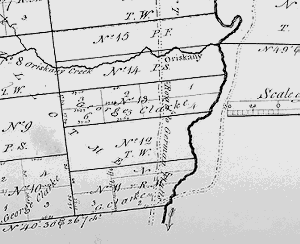 At the eastern end of the patent (bottom of the map), the relationship of the patent boundary to Oriskany Creek can be seen (see detail above). At this spot the river road branches with one segment crossing the river to the north. A modern highway follows this same alignment today. These maps are never going to have the proverbial "X marks the spot" but for those of you that already know the area or have done some research, they can be a wealth of information.
Both myself and Treasure Dave are big believers in canoes for treasure hunting. Most of the old water routes are the best and ONLY way to access a ton of virgin spots, a canoe can help you cover a good bit of stream and this is also the reason I recommend owning "amphibious" metal detectors. I know that the Fisher CZ-21 or the MineLab Excalibur's are expensive but you really need a waterproof machine if you want to do any serious hunting and they are worth the extra cash, it's not uncommon for Dave and I to be in three feet of water one minute and high up on a creek bank the next. We could never use a land machine to do this kind of hunting.
Here is another map of the patent of Oriskany for closer examination .... Just Click Here!
Good Hunting!


Both myself and Treasure Dave are big believers in canoes for treasure hunting. Most of the old water routes are the best and ONLY way to access a ton of virgin spots, a canoe can help you cover a good bit of stream and this is also the reason I recommend owning "amphibious" metal detectors. I know that the Fisher CZ-21 or the MineLab Excalibur's are expensive but you really need a waterproof machine if you want to do any serious hunting and they are worth the extra cash, it's not uncommon for Dave and I to be in three feet of water one minute and high up on a creek bank the next. We could never use a land machine to do this kind of hunting.
Here is another map of the patent of Oriskany for closer examination .... Just Click Here!
Good Hunting!
Treasure's Of The Palatine Mission
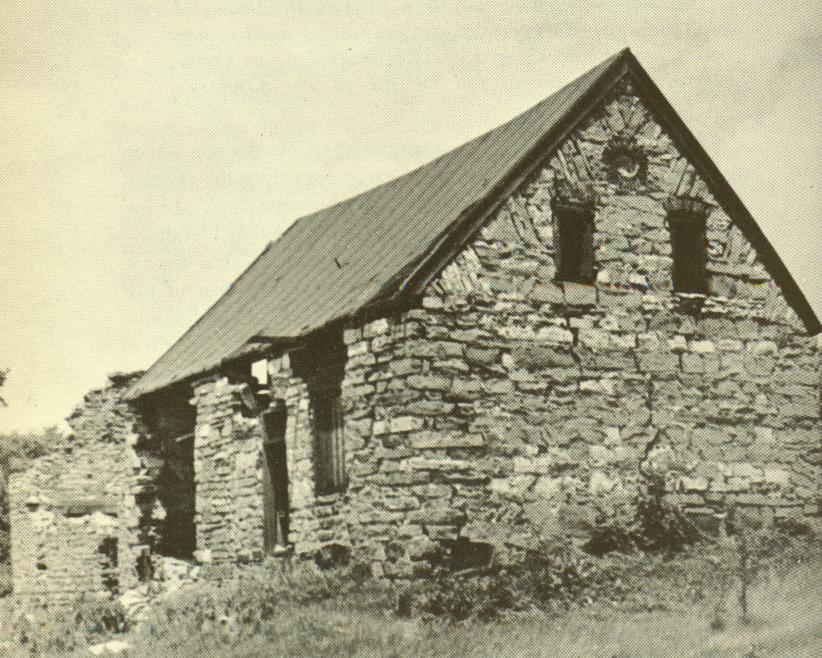
Built in 1729 by Jacobus Ehle, a Palatine German, who was educated at Heidelberg and ordained in England in 1722. In this year he migrated to America. He preached in the Hudson Valley and then made his way to the Mohawk Valley. After a long and fruitful life in the work of the church, he died in 1777, at the age of 92.
The house is no longer standing.
Not forgetting his civil obligations and in conformance with the law Dominie Ehle took the citizenship oath at Albany October 14, 1732. In 1732 he bought the land of Lot 1, Harrison Patent at the mission from Philip Schuyler that ever since has been the Ehle homestead. The easterly 100 acres was sold to George Eacker.
Following their home building the clearing was gradually carved out of the forest and along the river flats for farming. This opened up the view across the valley. The house stands on a slight elevation above the river flats so that the Indian canoes on the river and later the barges of the settlers could be seen as they passed.
On the river trail in front of the mission, the Indians traveled back and forth to trade or for conferences with the officials at Albany or Sir William Johnson, the Indian agent. Westward the settlers passed in search of homes or eastward to trade at Schenectady or Albany. By the ford across the river and through the clearing settlers and Indians passed to Stone Arabia and beyond, or across the river and down stream to Schoharie or by the Otsquago trail to the Susquehanna country. Over on the hill in front were the bark huts of the Mohawk village with camp fires smoking by day and twinkling like fireflies at night. Out of the surrounding forest strode the hunter, red and white with his kill, stopping to look at the home and children. Sometimes, that great man of the valley, Sir William Johnson passed on his way to conferences with the western Indians or marched his farmer militia and Indians to the French and Indian wars. Those were great days for the Dominie and his family when his genial patron stopped for greeting or refreshments.
The kindly Dominie won the good will of the Indians by his ministrations and on their arrival the Mission and the basement were their quarters, with their campfires in the clearing out in front. The saying that the Indian never forgets a kindness did not fail. No war danger ever reached that family or house while they were on guard. The family passed in time but the house staid on until vandals of the present days began to wreck it in times of peace, searching for relics or treasures.

That the local Indians, the Mohawks guarded well their missionary, his family and home was shown both in the French-Indian wars and the Revolution. When the Mohawks were strong enough no foe-man could reach the Mission and when the French-Indian raids were on that they could not resist, their warning came in the night to flee. In the Revolution the Mohawks were largely outnumbered by the Senecas, Cayugas, Onondagas and other fierce western tribes over whom they had but limited control. Again they warned Dominie Ehl's family when it was too dangerous at their home for their protection: The family would then cross to the island at the ford at night and with their canoes paddle downstream to their kinsfolk at Albany and safety. The house was always unharmed when they returned, once after an interval of two years.
In the urgent haste of one of those flights, the family silver and heirlooms were taken out in the darkness by the cellar way and buried In the forest a short distance away. No lights could be used and in the haste and anxiety the hiding place was not well located. This could not be found when the family returned and has not to this day, in spite of many searches by the family and treasure hunters, the latter often using divining rods, incantations and what not.
Possibly some watcher may have seen the treasure buried and secured it ..... or maybe not ???
This is just another of the many tales of treasure in the Upstate New York area that myself and Treasure Dave have researched over the years ..
PS
We are fairly certain the treasure is still there ..
New York Treasures and Metal Detecting Sites

Aug 30, 2010
True Treasure Tales From Colonial Upstate NY
The Story of the Money Hole

An Address Delivered Before a Joint Meeting of the Mohawk Valley Historical Association and the Van Epps-Hartley Chapter, New York State Archeological Assn., 1936. (By Robert M. Hartley.)
Many brave men never came back from the field of Oriskany on that memorable August day in 1777. Some of the most prominent residents of Old Warrensburg died there and their bodies were never recovered or buried. Among them was Samuel Pettingill, a well to do farmer and country doctor, he was a man of education and influence and a captain in Col. Frederick Fisher's Third Tryon County Militia.
Family tradition is that on the morning of the day he marched with his company to join General Herkimer for the relief of Fort Stanwix, that having a considerable savings of silver money, which evidently he feared to leave during his supposed temporary absence he put this money in an old copper teapot of tea kettle, picked up a shovel and walked eastward from his house to the woods near the Chuctamunda creek where he buried his savings. His family had noted with interest all his preparations, but none accompanied him, merely noting the direction he had taken towards the creek, consequently were in ignorance of the exact spot he had chosen as a safe hiding place from theft and possible raiders. It is said he was gone a short half hour. That afternoon he marched away, and never returned. Many searches were made by the family for this buried money, but without results. Though the years that followed its burial, many friends and neighbors assisted in the search, but its hiding place was never discovered.
About thirty-five years ago two of Capt. Samuel Pettingill's great great grandsons, Dewitt and Milton Devendorf, enthusiastically renewed the search in which I and others assisted. During the early springtime we prodded over several acres with sharp pointed steel rods and many excavations were made where the rods indicated obstructions that did not feel like stones. However, the labor expended was no more successful than all previous searches. Captain Pettingill's hiding place of where he buried his money on that August morning, so long ago, perhaps will never be known.
The tradition of this buried treasure still lingers, for the ravine near where the money was supposed to be buried has been commonly known for a hundred years or more as "The Money Hole."

As the next two stories have to do with the Ross and Butler raid on Warrensbush in October, 1781, it may not be amiss to here explain why this last raid was made.
(These are also excellent sites to metal detect, pay attention to landmark clues!)
Warrensbush was the most eastern section of Tryon County and because of its close proximity to Schenectady and Albany and their protection, few raiders had previously been able to penetrate and successfully destroy this settlement and Duanesburgh, while the people of all other sections along the frontier to the south and west were badly torn and quite destitute. Consequently, Warrensbush, until october, 1781, was as yet almost untouched and able to supply its less fortunate neighbors with much of their wheat and other necessary supplies. Knowing this, Governor Haldiman in the spring of 1781, sent spies into the Mohawk country to learn the condition of the people of Warrensbush and of their security against attack. These spies reported back that the people were alert to invasion. However, Haldiman was determined to destroy this settlement of possibly by a swift and secret attack. This raid was carefully planned by the Governor and his most experienced Ranger and Indian officers. Every detail was studied for its successful accomplishment, as all previous raids had lost their force before reaching this thickly settled section, which was producing for their more unfortunate neighbors in the Schoharie and upper Mohawk Valley the supplies they so badly needed. So during the summer preparations were made to send a picked forced of about a thousand men and Indians, under the command of Major John Ross and Lieut. Walter Butler, to destroy Warrensbush and Duanesburgh. A complete account of these preparations for this raid is contained in Chapter 10, of Cruickshank's History of the Royal Regiment of New York," ("Johnson's Greens") and also of Major Ross' official report to Gov. Haldiman, of the results of this expedition in which he states: "In seven miles of Warrensbush every house was in flame, 100 farms, three miles and a large granary for public use were reduced to ashes, the cattle and livestock were likewise destroyed--the inhabitants fled in the night, etc., etc."
The raiders advanced rapidly from Oswego over unfrequented trails, but when near Corry's Mush (Root) were discovered and an alarm was sent to the eastern settlements of Tryon and Schenectady counties. But by marching all night the invaders crossed the Schoharie creek near Fort Hunter, where they lay in the woods on the present Billing's farm on Yankee Hill, until daylight, when various detachments were sent out to destroy the settlements before help could reach them from Schenectady and other points. Among the descendants of Florida's pioneer families there still lingers stories and traditions of many thrilling escapes that have never been published. Simms, Beers and Frothingham histories have recorded many family traditions of the raids in the central and upper Mohawk and Schoharie Valley sections, but comparatively little of the escapes and experiences of the settlers of Warrensbush in one of the worst and most destructive raids that ever befell any section of our frontier at any one time has even been published. Perhaps this may be accounted for as it was the last great invasion in the Mohawk country just at the close of the Revolution and that while the results of the raid was quite complete, the effect was not so far reaching and sooner recovered, than had it come earlier in the war, but the war was ended and the inhabitants left to themselves without further fear, immediately began to recover and rebuild. This raid on Warrensbush ended with the battle of Johnstown late that afternoon and the death of Walter Butler on the retreat, at the crossing of the West Canada Creek the following morning.
The Escape of Mrs. Pettingill and Her Family in the Ross and Butler Raid of 1781.
This story had to do with another loss and near tragedy that befell the widow and family of Captain Samuel Pettingill. You will remember that Capt. Pettingill was killed at Oriskany. The death of husband and father must have been an almost paralyzing loss to his wife as she was left with a family of thirteen children, but courageous woman as she was, they had managed to live and we find them in the fall of 1781 living on their farm on the highlands in the southwestern part of the town with sufficient feed for their few cattle and supplies for the family for the coming winter.
One of the detachments sent out from the raider's temporary encampment on Yankee Hill, as previously mentioned, was discovered approaching the dwelling of Mrs. Pettingill, who with her family was able to escape to the nearby woods. They continued their breathless and headlong flight until they reached a secluded over-hanging branch along the Chuctanunda creek. here they hid in a cove like recess in the creek gorge. But several Indians had trailed them and with hushed breath the hidden family could hear them coming over the tinkling slate rock along the shore of the creek, searching for their place of concealment. Soon several Indians passed by -- almost within touching distance, but they did not discover the terrified family as they lay huddled in the crevice covered by vines and branching hemlocks. As the sound of the Indians' footsteps became less distinct over the crackling slate, the youngest child, a little girl, began to sob and cry, fearing the child's crying would reach the ears of the retreating Indians the dauntless, quick witted mother grabbed her apron and smothered the cries of the child. Instant action was necessary, for it meant death for all the family if their place of concealment was discovered. Several minutes passed before the mother dared remove her hand from the mouth of the now unconscious girl. She was apparently dead, but by vigorous shaking soon began to breathe again. Towards nightfall the family cautiously made their way back to their home only to find their buildings burned with all their possessions. Family tradition is that fortunately a stack of wheat had been missed by the raiders and it is declared that the family lived on this stack of wheat during the early fall until they could build themselves within the cellar of their burned dwelling a make shift shelter from partially burned timbers and poles which they thatched and roofed with brush and straw and here they lived through the hard winter of 1781-82. It is also family tradition that the undestroyed wheat in the partially burned stack contributed very largely to the family's source of support during the winter.
Surely these ancestors of ours never failed to meet an emergency in those dark days of bloody strife.
The Escape of the Rowland Family.
(more potential treasure)
This is also a story of the Ross and Butler raid of 1781. The Rowland family, upon the coming of the raiders in the early morning, carried some of their most useful household effects to the nearby woods when they all took up a hiding place, prepared in advance for such an emergency upon a platform of poles built some fifteen feet above the ground in the middle of a dense thicket of sizeable low limbed hemlock trees, which ordinarily would not be seen either from the ground or from any other direction. Here the family quietly lay and in the distance could see the smoke of their burning home and that of their neighbor--Timothy Hunte, rolling over the tree tops.
For several hours the family feared to come down, when hearing a slight noise below they saw to their terror several Indians coming through the woods in their direction. Suspense and fear held them stupefied as the Indians passed directly under their hiding place, the last one suddenly stopped, but he did not look up or around, he had only stopped to adjust some of the load of spoil he was carrying, when he hurried on after his companions and needless to say greatly to the relief of the terrified family in the tree tops above.
(This story was told by the late Jay C. Rowland in 1905, whose grandmother was the mother of the family in the tree tops.)
This Is as good as it gets .. Treasure Dave and I had to dig for this one, but the exact location still needs to be pinpointed by YOU and hunted hard. I would dig all HITS in these areas, Including the 'overload signals' , that old tea kettle should ring off like a garbage can lid! Let us know how you do.
Good Luck

An Address Delivered Before a Joint Meeting of the Mohawk Valley Historical Association and the Van Epps-Hartley Chapter, New York State Archeological Assn., 1936. (By Robert M. Hartley.)
Many brave men never came back from the field of Oriskany on that memorable August day in 1777. Some of the most prominent residents of Old Warrensburg died there and their bodies were never recovered or buried. Among them was Samuel Pettingill, a well to do farmer and country doctor, he was a man of education and influence and a captain in Col. Frederick Fisher's Third Tryon County Militia.
Family tradition is that on the morning of the day he marched with his company to join General Herkimer for the relief of Fort Stanwix, that having a considerable savings of silver money, which evidently he feared to leave during his supposed temporary absence he put this money in an old copper teapot of tea kettle, picked up a shovel and walked eastward from his house to the woods near the Chuctamunda creek where he buried his savings. His family had noted with interest all his preparations, but none accompanied him, merely noting the direction he had taken towards the creek, consequently were in ignorance of the exact spot he had chosen as a safe hiding place from theft and possible raiders. It is said he was gone a short half hour. That afternoon he marched away, and never returned. Many searches were made by the family for this buried money, but without results. Though the years that followed its burial, many friends and neighbors assisted in the search, but its hiding place was never discovered.
About thirty-five years ago two of Capt. Samuel Pettingill's great great grandsons, Dewitt and Milton Devendorf, enthusiastically renewed the search in which I and others assisted. During the early springtime we prodded over several acres with sharp pointed steel rods and many excavations were made where the rods indicated obstructions that did not feel like stones. However, the labor expended was no more successful than all previous searches. Captain Pettingill's hiding place of where he buried his money on that August morning, so long ago, perhaps will never be known.
The tradition of this buried treasure still lingers, for the ravine near where the money was supposed to be buried has been commonly known for a hundred years or more as "The Money Hole."

As the next two stories have to do with the Ross and Butler raid on Warrensbush in October, 1781, it may not be amiss to here explain why this last raid was made.
(These are also excellent sites to metal detect, pay attention to landmark clues!)
Warrensbush was the most eastern section of Tryon County and because of its close proximity to Schenectady and Albany and their protection, few raiders had previously been able to penetrate and successfully destroy this settlement and Duanesburgh, while the people of all other sections along the frontier to the south and west were badly torn and quite destitute. Consequently, Warrensbush, until october, 1781, was as yet almost untouched and able to supply its less fortunate neighbors with much of their wheat and other necessary supplies. Knowing this, Governor Haldiman in the spring of 1781, sent spies into the Mohawk country to learn the condition of the people of Warrensbush and of their security against attack. These spies reported back that the people were alert to invasion. However, Haldiman was determined to destroy this settlement of possibly by a swift and secret attack. This raid was carefully planned by the Governor and his most experienced Ranger and Indian officers. Every detail was studied for its successful accomplishment, as all previous raids had lost their force before reaching this thickly settled section, which was producing for their more unfortunate neighbors in the Schoharie and upper Mohawk Valley the supplies they so badly needed. So during the summer preparations were made to send a picked forced of about a thousand men and Indians, under the command of Major John Ross and Lieut. Walter Butler, to destroy Warrensbush and Duanesburgh. A complete account of these preparations for this raid is contained in Chapter 10, of Cruickshank's History of the Royal Regiment of New York," ("Johnson's Greens") and also of Major Ross' official report to Gov. Haldiman, of the results of this expedition in which he states: "In seven miles of Warrensbush every house was in flame, 100 farms, three miles and a large granary for public use were reduced to ashes, the cattle and livestock were likewise destroyed--the inhabitants fled in the night, etc., etc."
The raiders advanced rapidly from Oswego over unfrequented trails, but when near Corry's Mush (Root) were discovered and an alarm was sent to the eastern settlements of Tryon and Schenectady counties. But by marching all night the invaders crossed the Schoharie creek near Fort Hunter, where they lay in the woods on the present Billing's farm on Yankee Hill, until daylight, when various detachments were sent out to destroy the settlements before help could reach them from Schenectady and other points. Among the descendants of Florida's pioneer families there still lingers stories and traditions of many thrilling escapes that have never been published. Simms, Beers and Frothingham histories have recorded many family traditions of the raids in the central and upper Mohawk and Schoharie Valley sections, but comparatively little of the escapes and experiences of the settlers of Warrensbush in one of the worst and most destructive raids that ever befell any section of our frontier at any one time has even been published. Perhaps this may be accounted for as it was the last great invasion in the Mohawk country just at the close of the Revolution and that while the results of the raid was quite complete, the effect was not so far reaching and sooner recovered, than had it come earlier in the war, but the war was ended and the inhabitants left to themselves without further fear, immediately began to recover and rebuild. This raid on Warrensbush ended with the battle of Johnstown late that afternoon and the death of Walter Butler on the retreat, at the crossing of the West Canada Creek the following morning.
The Escape of Mrs. Pettingill and Her Family in the Ross and Butler Raid of 1781.
This story had to do with another loss and near tragedy that befell the widow and family of Captain Samuel Pettingill. You will remember that Capt. Pettingill was killed at Oriskany. The death of husband and father must have been an almost paralyzing loss to his wife as she was left with a family of thirteen children, but courageous woman as she was, they had managed to live and we find them in the fall of 1781 living on their farm on the highlands in the southwestern part of the town with sufficient feed for their few cattle and supplies for the family for the coming winter.
One of the detachments sent out from the raider's temporary encampment on Yankee Hill, as previously mentioned, was discovered approaching the dwelling of Mrs. Pettingill, who with her family was able to escape to the nearby woods. They continued their breathless and headlong flight until they reached a secluded over-hanging branch along the Chuctanunda creek. here they hid in a cove like recess in the creek gorge. But several Indians had trailed them and with hushed breath the hidden family could hear them coming over the tinkling slate rock along the shore of the creek, searching for their place of concealment. Soon several Indians passed by -- almost within touching distance, but they did not discover the terrified family as they lay huddled in the crevice covered by vines and branching hemlocks. As the sound of the Indians' footsteps became less distinct over the crackling slate, the youngest child, a little girl, began to sob and cry, fearing the child's crying would reach the ears of the retreating Indians the dauntless, quick witted mother grabbed her apron and smothered the cries of the child. Instant action was necessary, for it meant death for all the family if their place of concealment was discovered. Several minutes passed before the mother dared remove her hand from the mouth of the now unconscious girl. She was apparently dead, but by vigorous shaking soon began to breathe again. Towards nightfall the family cautiously made their way back to their home only to find their buildings burned with all their possessions. Family tradition is that fortunately a stack of wheat had been missed by the raiders and it is declared that the family lived on this stack of wheat during the early fall until they could build themselves within the cellar of their burned dwelling a make shift shelter from partially burned timbers and poles which they thatched and roofed with brush and straw and here they lived through the hard winter of 1781-82. It is also family tradition that the undestroyed wheat in the partially burned stack contributed very largely to the family's source of support during the winter.
Surely these ancestors of ours never failed to meet an emergency in those dark days of bloody strife.
The Escape of the Rowland Family.
(more potential treasure)
This is also a story of the Ross and Butler raid of 1781. The Rowland family, upon the coming of the raiders in the early morning, carried some of their most useful household effects to the nearby woods when they all took up a hiding place, prepared in advance for such an emergency upon a platform of poles built some fifteen feet above the ground in the middle of a dense thicket of sizeable low limbed hemlock trees, which ordinarily would not be seen either from the ground or from any other direction. Here the family quietly lay and in the distance could see the smoke of their burning home and that of their neighbor--Timothy Hunte, rolling over the tree tops.
For several hours the family feared to come down, when hearing a slight noise below they saw to their terror several Indians coming through the woods in their direction. Suspense and fear held them stupefied as the Indians passed directly under their hiding place, the last one suddenly stopped, but he did not look up or around, he had only stopped to adjust some of the load of spoil he was carrying, when he hurried on after his companions and needless to say greatly to the relief of the terrified family in the tree tops above.
(This story was told by the late Jay C. Rowland in 1905, whose grandmother was the mother of the family in the tree tops.)
This Is as good as it gets .. Treasure Dave and I had to dig for this one, but the exact location still needs to be pinpointed by YOU and hunted hard. I would dig all HITS in these areas, Including the 'overload signals' , that old tea kettle should ring off like a garbage can lid! Let us know how you do.
Good Luck
Subscribe to:
Posts (Atom)